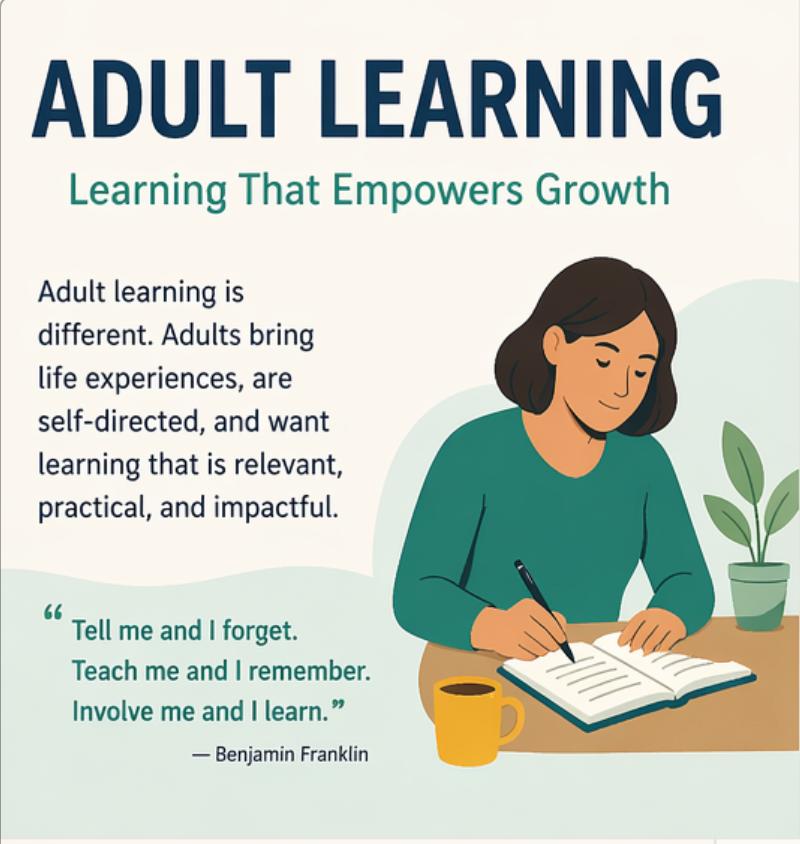
Why Coaching Works: The Hidden Connection to Adult Learning
In today’s coaching landscape, there is no shortage of tools, frameworks, and certifications. Yet one fundamental question is often overlooked:
Why does coaching work?
The answer doesn’t come from coaching alone. It comes from a deeper field, adult learning science.
A key reference in this space is Adult Learning: Linking Theory and Practice, which explores how adults truly learn, grow, and change. When you look closely, you realize something important:
Coaching is not separate from adult learning; it is one of its most powerful applications.
Adults Don’t Learn the Way We Think
Traditional education is built on instruction:
- someone teaches
- someone listens
- someone memorizes
But adult learning works differently.
Adults:
- bring prior experiences
- question relevance
- seek practical application
- learn best through doing, not listening
This shift is critical.
Because if learning is not applied, reflected on, or personally meaningful, it simply doesn’t stick.
Coaching as Experiential Learning
One of the core models in adult learning is experiential learning, the idea that people learn through a cycle of: Experience, Reflection, Insight, Action.
This is exactly what happens in a coaching conversation.
- A client brings a real-life challenge (experience)
- The coach facilitates exploration (reflection)
- The client gains clarity (insight)
- The client acts (application)
This is not theoretical learning. It is learning in motion.
Why Reflection Changes Everything
A major insight from adult learning research is this:
Experience alone does not create learning, reflection does.
Without reflection: experiences repeat, mistakes persist, growth slows down.
Coaching creates a structured space where reflection is not optional, it is central.
Through thoughtful questioning, coaching helps individuals process experiences, identify patterns, and challenge assumptions. This is where real development happens.
Coaching and Self-Directed Growth
Adult learning also emphasizes self-direction.
Adults learn best when they:
- take ownership
- generate their own insights
- make their own decisions
Coaching aligns perfectly with this. Rather than giving advice, coaching: asks, challenges, supports.
The result? The learner becomes the driver of their own growth. And that is far more powerful than being told what to do.
The Role of Perspective Shifts
Another key concept in adult learning is transformative learning; moments when individuals begin to see things differently.
These are the moments when:
- beliefs are questioned
- assumptions are challenged
- new perspectives emerge
Coaching often creates exactly these breakthroughs.
A single powerful question can shift how someone:
- sees themselves
- approaches challenges
- makes decisions
This is not surface-level learning. This is deep, lasting change.
Why This Matters for Coaching Platforms
Understanding this connection changes how we think about coaching entirely.
If coaching is a form of adult learning, then growth doesn’t come from content consumption, passive observation, or occasional sessions.
It comes from:
- consistent practice
- structured reflection
- feedback and iteration
This is where many platforms fall short. They focus on access, but not on learning design.
A More Intentional Approach to Growth
When coaching is aligned with adult learning principles, it becomes something much more powerful:
- not just conversations, but learning experiences
- not just sessions, but development cycles
- not just support, but measurable growth
This is the difference between practicing coaching… and developing as a coach.
Final Thought
The science is clear:
Adults don’t learn by consuming, they learn by doing, reflecting, and evolving.
Coaching, at its best, is built exactly on this foundation.
Understanding the connection between adult learning and coaching doesn’t just make you a better coach, it changes how you design growth itself.