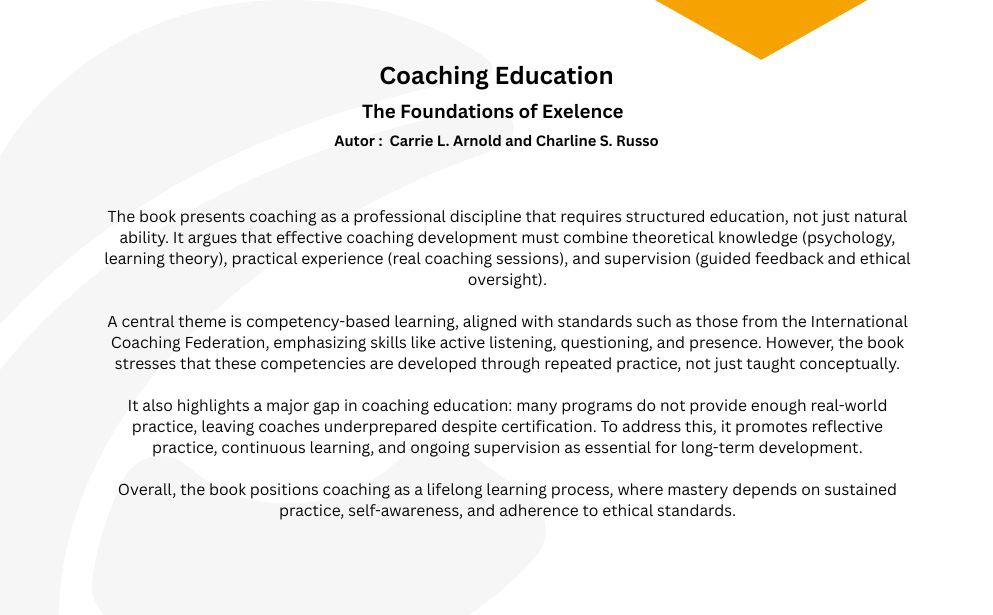
Every year, thousands of talented people complete coaching education programs. They learn the models, the competencies, the ethics. They pass the assessments. And then — many of them barely coach.
Here is the uncomfortable truth of our profession: coaching education teaches you about coaching. Only practice makes you a coach.
The Gap Between Training and Mastery
Think of any skill-based profession. A pilot doesn’t earn confidence from flight school alone — they log hundreds of flight hours. A surgeon doesn’t stop practicing after medical school. Musicians, athletes, therapists — every profession built on skill treats continuous practice as non-negotiable.
Coaching is no different. Research on expertise (Ericsson’s work on deliberate practice) shows that skill grows through repeated, focused practice with feedback — not through knowledge alone. Listening deeply, asking powerful questions, staying comfortable in silence, managing your own agenda: these are embodied skills. You cannot think your way into them. You coach your way into them.
Why Practice During Education Matters So Much
Most coaching programs include some practice — a few triads, observed sessions, maybe a practicum. But it’s rarely enough. Here’s why continuous practice during your education changes everything:
1. You turn theory into reflex. In a real session, there’s no time to recall a model from your textbook. Practice builds the automatic habits — presence, curiosity, silence — that let theory disappear into the background.
2. You make mistakes safely. Every coach has sessions that fall flat. Better to have them with a peer who understands the learning process than with a paying client whose trust you need.
3. You discover your style. Coaching education gives everyone the same tools. Practice reveals which ones are truly yours — your questions, your pacing, your presence.
4. You build real confidence. Confidence doesn’t come from knowing you passed an exam. It comes from having coached fifty sessions and knowing you can handle whatever walks into the room.
5. You collect evidence of experience. Documented session hours matter — for credentials like ICF’s ACC and PCC, for coaching school requirements, and for your own tracking of growth.
The Problem: Practice Opportunities Are Scarce
Here’s the paradox every coaching student knows: you need practice clients to become a good coach, but you need to be a good coach to find clients. Friends and family get tired of being practice subjects. Paid supervision is valuable but expensive. And once your program ends, the built-in practice partners disappear.
This is exactly the gap peer coaching fills. When coaches coach each other, everyone wins: you get real sessions with real people who take the process seriously, you experience the client’s seat (which transforms your coaching), and you both log hours toward your goals.
What Deliberate Practice Looks Like for Coaches
Not all practice is equal. To make your sessions count:
- Practice regularly — weekly sessions beat occasional marathons.
- Rotate partners — different coaching styles stretch your adaptability.
- Ask for honest feedback — comfort doesn’t build skill; feedback does.
- Log every session — date, duration, what you worked on. Your log becomes both your credential evidence and your growth map.
- Reflect after each session — five minutes of notes doubles the learning.
Practice Shouldn’t End at Graduation
The best coaches never stop practicing. Certification is a milestone, not a finish line. Continuous practice keeps your skills sharp, exposes you to new styles and cultures, and keeps your coaching alive rather than routine.
That’s why we built Link2Coaching: a global platform where coaches find peer practice partners anytime, get matched by language, schedule, and coaching focus, hold unlimited sessions, and log their coaching hours automatically. Because your education doesn’t end when the course does — and neither should your practice.
Your coaching education gave you the map. Practice is the journey. Start practicing today.
Download the Link2Coaching App